.svg)
The Hidden Cost of Building a Restaurant Ordering System From Scratch
 By Infinitie Technologies2 min read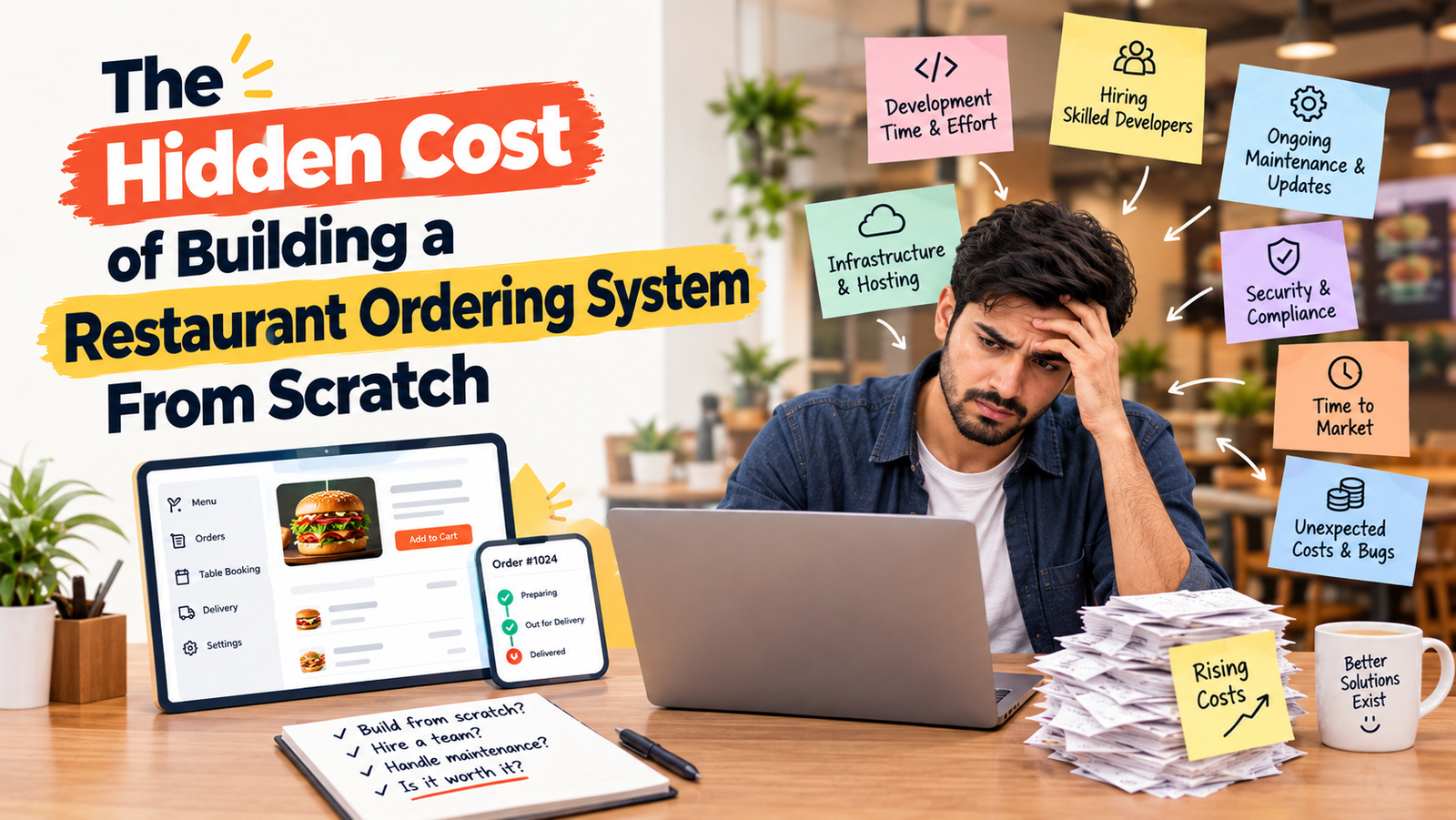
A restaurant ordering system looks simple on paper — until live tracking, multiple outlets, and delivery coordination are factored in. Here's what building one from scratch actually costs, and why starting from a proven base is cheaper.
The Hidden Cost of Building a Restaurant Ordering System From Scratch
A restaurant ordering system looks simple from the outside: a menu, a cart, a checkout. The estimate usually starts small — until live order tracking, kitchen notifications, multiple outlets, and delivery-partner coordination get added in, and the timeline and budget both double.
What the estimate usually misses
Menus that change by outlet, orders that need to reach the kitchen instantly, delivery assignment that works whether you have your own riders or use partners, and reporting across every location — none of this shows up in a basic quote, but all of it is what separates a working system from a demo.
Why starting from a proven base costs less
Every one of these features has already been built, tested, and refined against real restaurant order volume in existing platforms. Rebuilding them from a blank file means paying, in time and money, for problems that have already been solved elsewhere.
This is where Hyperlocal fits — a multivendor delivery platform covering food, grocery, and pharmacy, with outlet management, live order tracking, and delivery-partner assignment already built in. It's ready-to-deploy source code, so a restaurant ordering system doesn't have to start from zero.
The takeaway
The real cost of building from scratch isn't the first version — it's every feature you didn't budget for that turns out to be essential. Starting from a system that already handles live orders means spending your budget on your restaurant, not on rebuilding infrastructure.