.svg)
Do You Need a Mobile App for Your Online Store?
 By Infinitie Technologies7 min read
Most people now shop on their phones, and shopping apps turn more visitors into buyers (about 3.5% vs 2% for mobile websites). An app helps most when customers buy again and again, like groceries, food, or marketplace shopping. If you’re just testing an idea or sell rarely, a good mobile website is enough to start. The blog also gives a 5-question checklist to decide, and shows that you can launch faster with ready-made apps like HyperCommerce or Hyperlocal instead of building from zero.
Do You Need a Mobile App for Your Online Store?
Quick answer: Not always, but often yes. If your customers shop on their phones and buy from you more than once, a mobile app usually pays off. Shopping apps convert at about 3.5%, compared with about 2% on mobile websites (Firework, 2026). If you sell rarely or you're only testing an idea, a good mobile website is enough to start.
Are people really shopping on their phones?
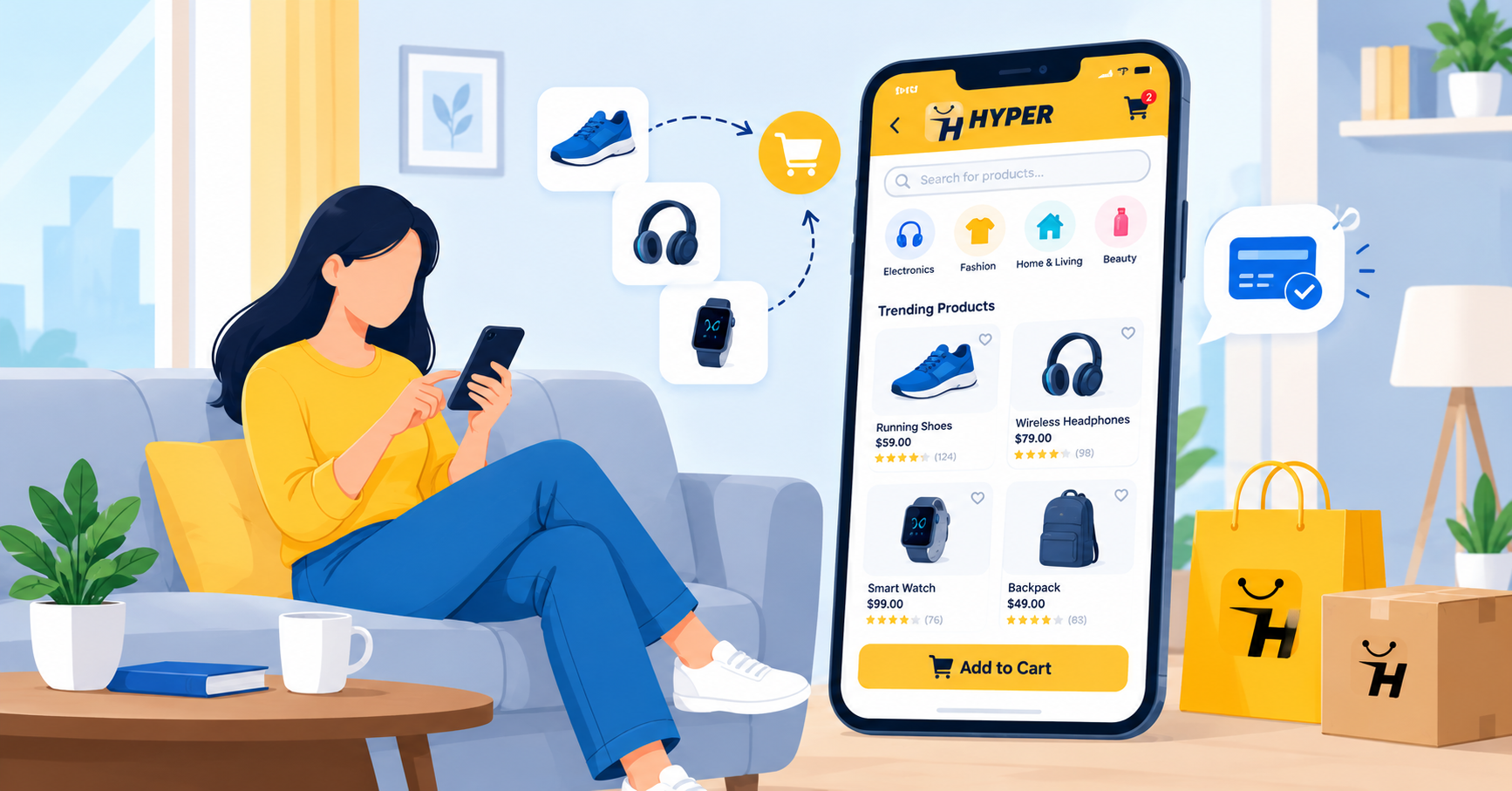
Yes, and in India especially. Mordor Intelligence reports that smartphones generated about 76% of India's e-commerce market in 2025, with desktop sitting near 20%. A separate analysis of more than 3 million orders by Admitad found that about 49% of online orders in early 2026 came from smartphones, up from 45% a year earlier. The numbers differ because the two sources measure different things (market value vs. order count), but both point the same way: mobile is where your customers are.
Mobile app vs mobile website: what's the difference?
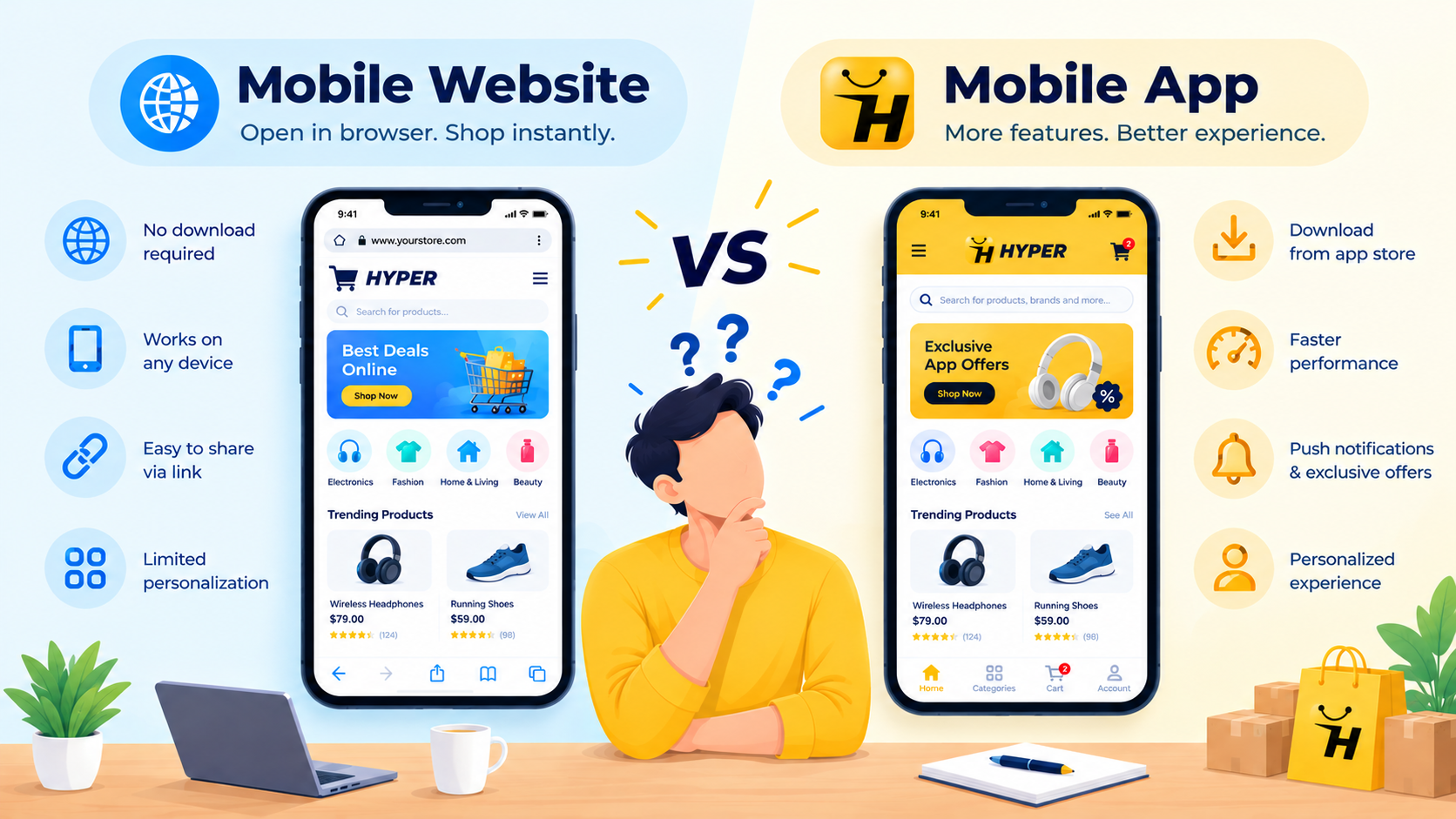
A mobile website opens in a phone browser. Anyone can reach it through Google or a link, with nothing to install. A mobile app is downloaded from the Play Store or App Store and lives on the customer's home screen.
| Feature | Mobile website | Mobile app |
|---|---|---|
| How customers find you | Google search, ads, links | App store, links and ads |
| Setup effort for the customer | None, just open the link | Download and install once |
| Average conversion | About 2% | About 3.5% |
| Reminders to customers | Email, SMS | Push notifications, email, SMS |
| Speed and convenience | Depends on the browser | Faster, saved login, one-tap reorder |
| Best for | New or occasional visitors | Repeat customers |
What do apps do better?
- They convert more visitors into buyers. Industry data cited by MobiLoud shows apps converting at roughly 3x the rate of mobile websites, and app users view 286% more products per session.
- They bring customers back. Push notifications let you tell customers about a sale or an order update without paying for ads. MobiLoud reports an average push notification conversion rate of 4.4%.
- They make reordering easy. Saved addresses, saved payment methods, and order history mean fewer steps to buy again.
When you might not need an app (yet)
An app isn't the right first step for everyone. You can wait if:
- You're still testing whether your product will sell.
- Customers buy only once in a long while, such as furniture or big electronics.
- Your traffic mostly comes from Google search and people don't return.
One common rule of thumb from mobile commerce teams, like the one at The Droids On Roids, is that an app starts to make sense when a good share of your customers (around 40% or more) buy again. Treat it as a guide, not a rule.
There's also a middle path. Progressive web apps (PWAs) work like an app without a download. Mordor Intelligence says they deliver about 80–85% of native app conversion in India. They're a decent starting point, but they don't give you a presence on the app stores.
Quick checklist: is it time for your own app?
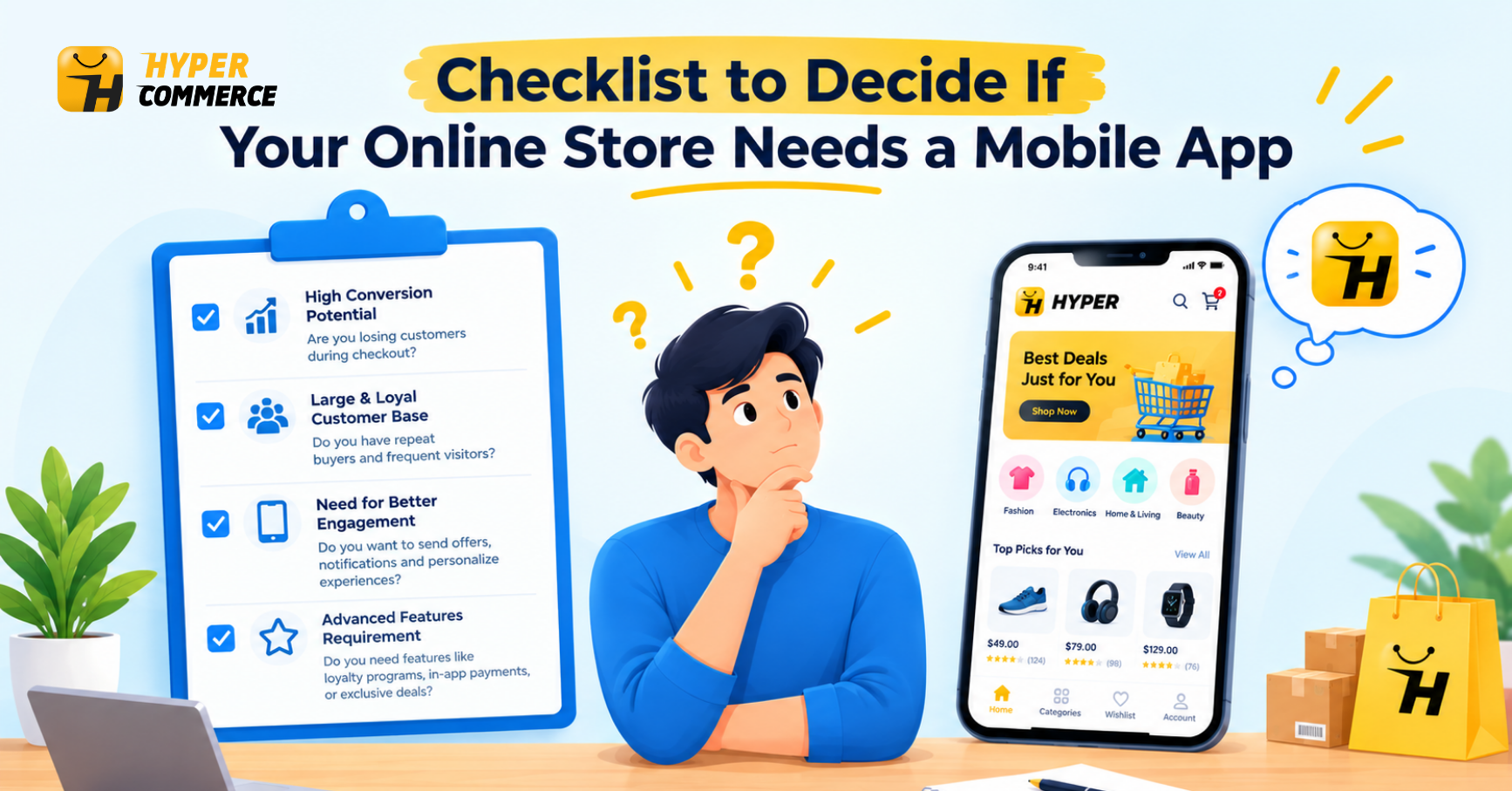
- Do customers come back? If yes, an app helps you keep them.
- Do you sell everyday items? Groceries, food, medicines, and beauty products are bought often and suit apps well.
- Do you have many sellers or products? Browsing a large catalogue is much smoother in an app.
- Do you want to send offers directly? Push notifications reach customers instantly.
- Do you want your brand on the store? Being on the Play Store and App Store builds trust.
If you said yes to two or more, an app is worth considering. Not sure where you stand? Tell us about your store on WhatsApp and we'll give you an honest answer.
Building an app doesn't have to start from zero
The biggest worry for most store owners is cost and time. Building a custom app from scratch can take months. A ready-made source code product lets you skip the heavy lifting: you get a tested base, change the branding and features, and launch much sooner.
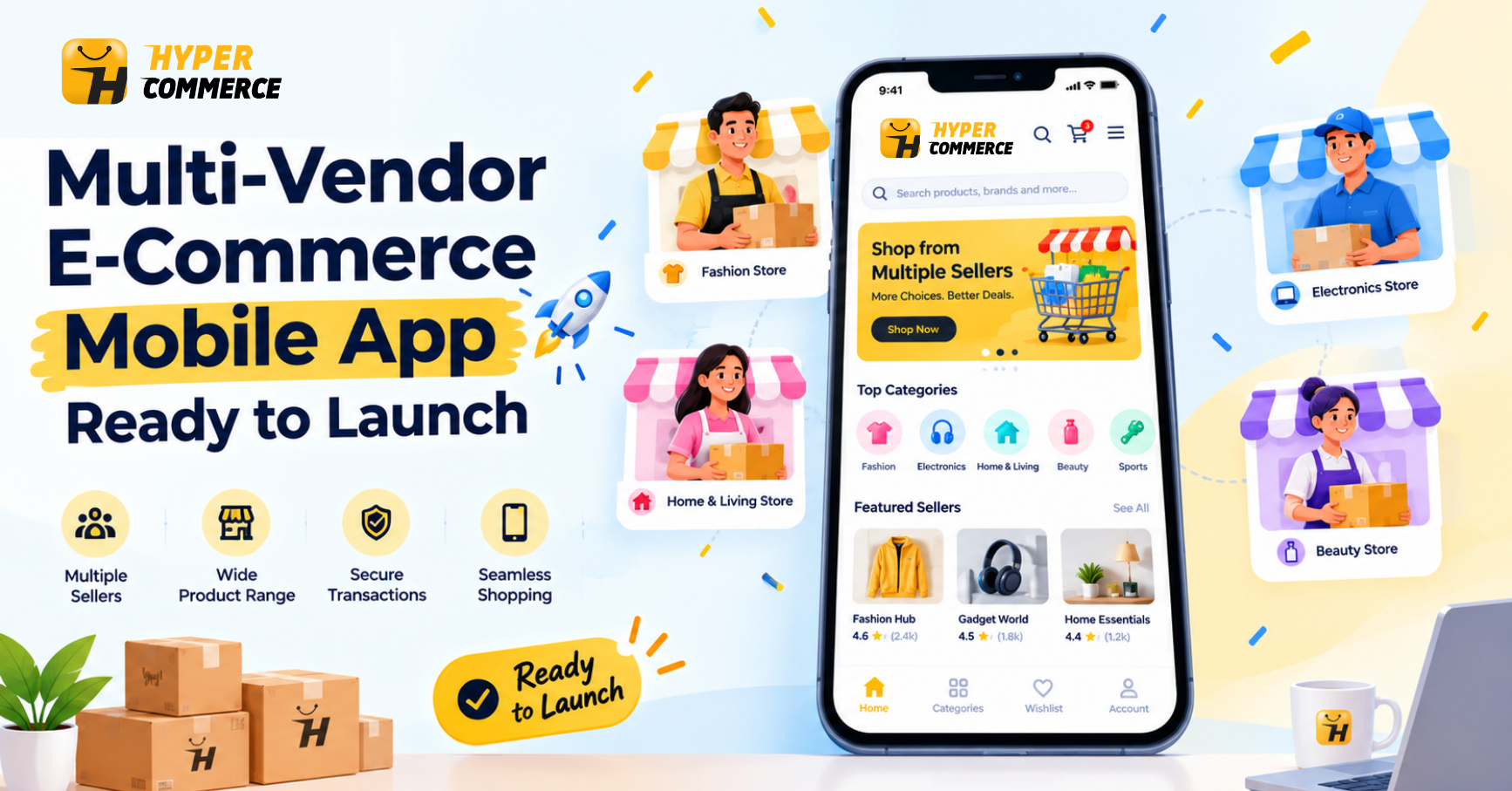
- HyperCommerce is a multi-vendor marketplace with Flutter mobile apps, a Laravel admin panel, and a website. It's a fit if you want a store with many sellers and a wide range of products.
- Hyperlocal is for grocery, food, and pharmacy delivery, with customer and delivery partner apps, an admin panel, and a website.
Both come as source code: you buy once, host on your own server, and own the code. If you'd like help with customization or publishing, our team can do that too.
Frequently asked questions
Do I need a mobile app if I already have a website?
Not necessarily. A website is enough to start. An app becomes valuable once you have repeat customers and want to bring them back with notifications and faster checkout.
Is a mobile app better than a mobile website for sales?
On average, yes. Shopping apps convert at about 3.5% versus about 2% on mobile websites, though results depend on your products and customers.
How much does it cost to build an e-commerce mobile app?
A custom app built from scratch usually costs much more and takes longer than a ready-made source code product that you customize. The exact cost depends on features, design, and the team you hire.
What is a PWA, and can it replace an app?
A progressive web app is a website that behaves like an app and needs no download. It can be a good low-cost start, but it can't match the presence and features of an app on the Play Store and App Store.
Which type of store gets the most from an app?
Stores with frequent, repeat purchases, such as grocery, food, pharmacy, and beauty, tend to benefit most. Marketplaces with many sellers also do well, since customers browse large catalogues.
Ready to take the next step?
If you're thinking about launching your own store app, start with HyperCommerce for a multi-vendor marketplace or Hyperlocal for local delivery. Still have questions or feeling stuck? Message our team on WhatsApp and we'll help you decide.