.svg)
Single-Vendor vs Multi-Vendor: Picking the Right eCommerce Model
 By Infinitie Technologies2 min read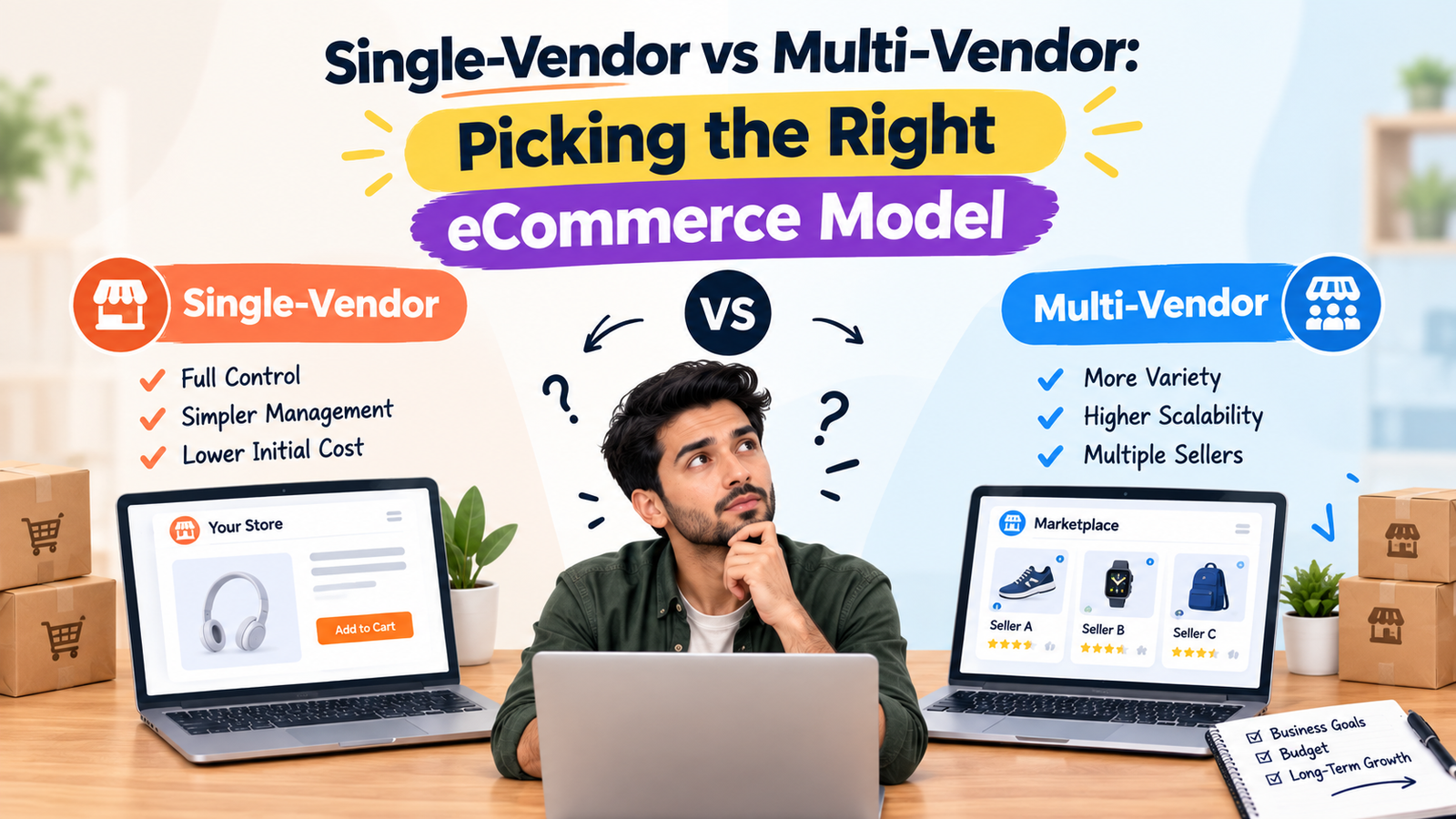
Single-vendor and multi-vendor stores look similar on the surface but need completely different infrastructure underneath. Here's how to pick the right model based on where your business is headed, not just where it is today.
Single-Vendor vs Multi-Vendor: Picking the Right eCommerce Model
One of the first decisions in building an online store gets skipped more often than it should: are you selling your own products, or building a marketplace where other sellers list theirs? The two models look similar on the surface but need almost entirely different infrastructure underneath.
Single-vendor: simple, but a ceiling
A single-vendor store is straightforward — one catalog, one set of sellers policies, one checkout. It's the right call if you're selling your own inventory. But it doesn't scale into a marketplace later without a near-total rebuild, since the entire structure assumes one seller, not many.
Multi-vendor: more complex, more upside
A multi-vendor marketplace needs separate seller dashboards, commission handling, individual vendor payouts, and order splitting when one cart has products from different sellers. It's more to build correctly — but it's also how you turn a store into a platform other businesses want to sell on.
This is exactly what HyperCommerce is built for — a multivendor marketplace with Flutter apps, a customer website, and a Laravel admin panel, so seller management, commissions, and payouts are already handled rather than something you build from zero.
The takeaway
Pick based on where the business is going, not just where it is today. If a marketplace is even a possibility down the line, starting with multi-vendor infrastructure saves you from rebuilding the entire platform later.