.svg)
Manual Billing Is Costing Your Store More Than You Think
 By Infinitie Technologies2 min read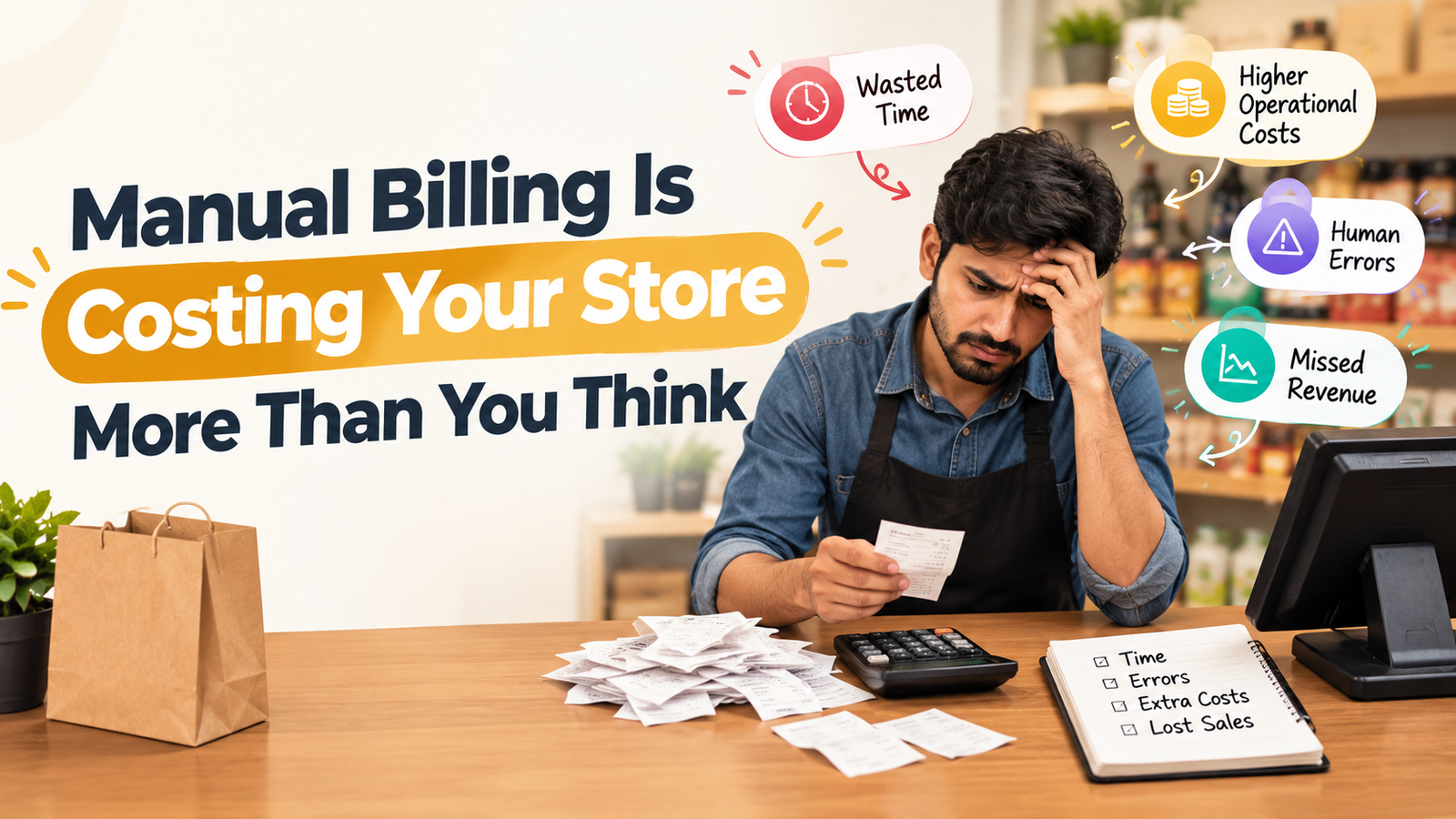
Manual billing feels simple until you count the cost — mismatched stock, unlogged returns, and hours lost to counting by hand. Here's what a proper POS system actually fixes, and why buying one outright beats a monthly SaaS bill.
Manual Billing Is Costing Your Store More Than You Think
A lot of small stores still run on a cash register, a notebook, and a lot of memory. It feels simple — until the end of the month, when the stock count doesn't match the sales, a customer disputes a bill, and nobody can say for sure what actually sold and what walked out the back door.
Where the money actually leaks
Manual billing doesn't fail loudly. It fails quietly — a wrong price typed in, a return that never gets logged, stock that runs out because nobody noticed it was low. None of these show up as one big loss. They show up as a business that works harder than it should for the same profit.
What a real POS system fixes
A proper point-of-sale setup ties billing, inventory, and accounting together automatically. Every sale updates stock in real time, every return is logged, and every report — daily sales, low stock, profit margins — is a click away instead of a weekend of manual counting.
This is exactly what Hyper POS is built for — billing, inventory, invoicing, and accounting in one system, working online or offline, so a spotty connection never stops a sale. It's ready-to-deploy source code, so you're not paying a monthly SaaS fee for something you can own outright.
The takeaway
Manual billing isn't free — it's just an invisible cost. A POS system doesn't just save time at the counter; it closes the small gaps where profit quietly disappears every single day.
Selling online too? The same "stop losing money to manual gaps" logic applies to your storefront — take a look at HyperCommerce if you're running or planning a multivendor marketplace.