.svg)
Quick Commerce Is Booming in India: How to Start Your Own 10-Minute Delivery Business in 2026
 By Infinitie Technologies7 min read
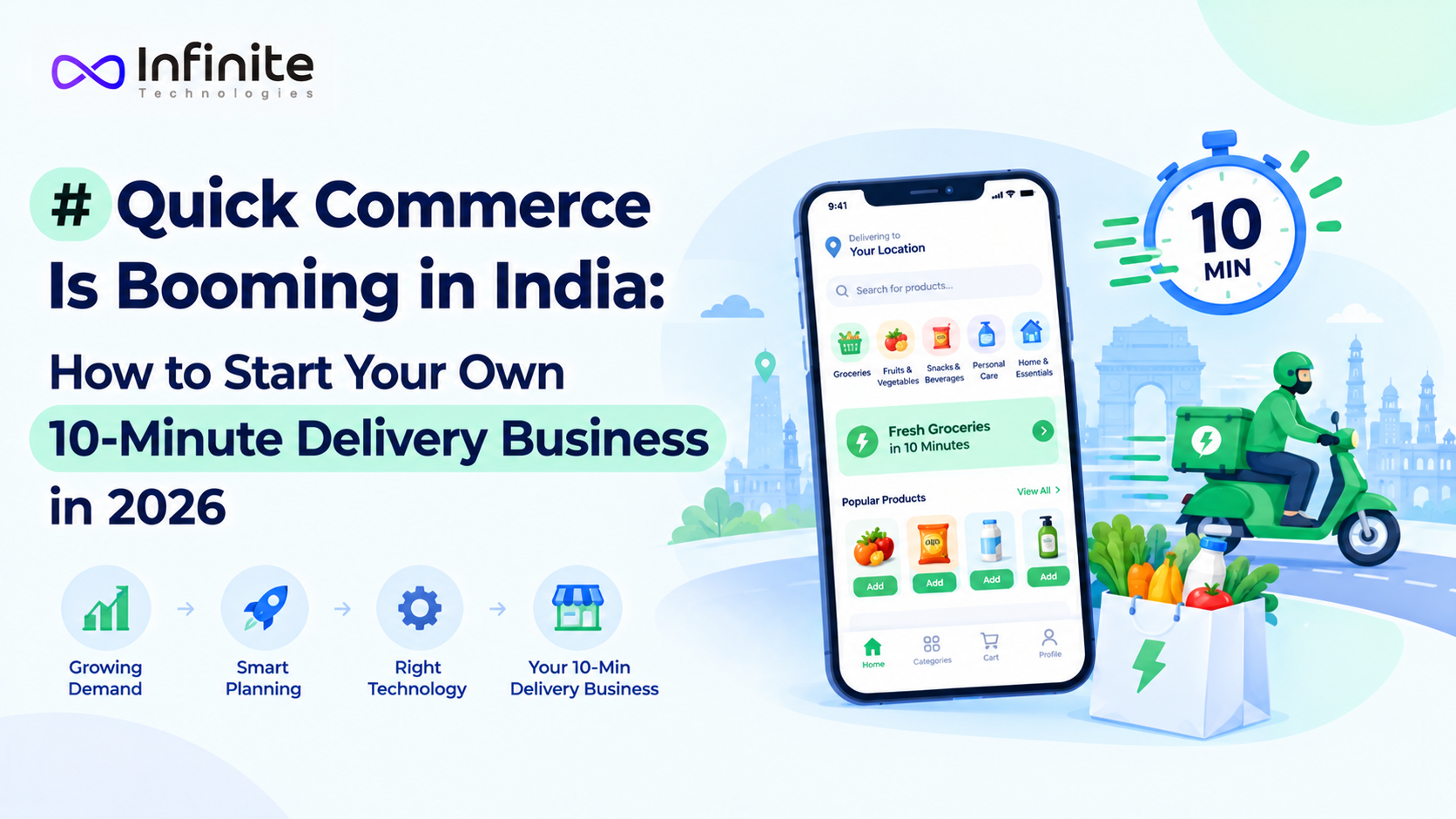
Quick commerce, where groceries, food, and medicines arrive in 10–30 minutes, is growing about 40% a year in India, and smaller Tier 2 cities are the next hotspots. You don’t need big warehouses to start. Pick a niche and one city, partner with local stores, get a ready-made delivery app like Hyperlocal, build a small rider team, and launch in one area first. The blog also gives an honest reality check, since running dark stores is expensive.
Quick Commerce Is Booming in India: How to Start Your Own 10-Minute Delivery Business in 2026
Quick answer: Quick commerce (also called q-commerce) is India's fastest-growing way to shop, with groceries, food, and medicines arriving in about 10–30 minutes. To start your own quick commerce business, pick a niche and a city, partner with local stores, get a delivery app like Hyperlocal, build a small rider team, and launch in one area first.
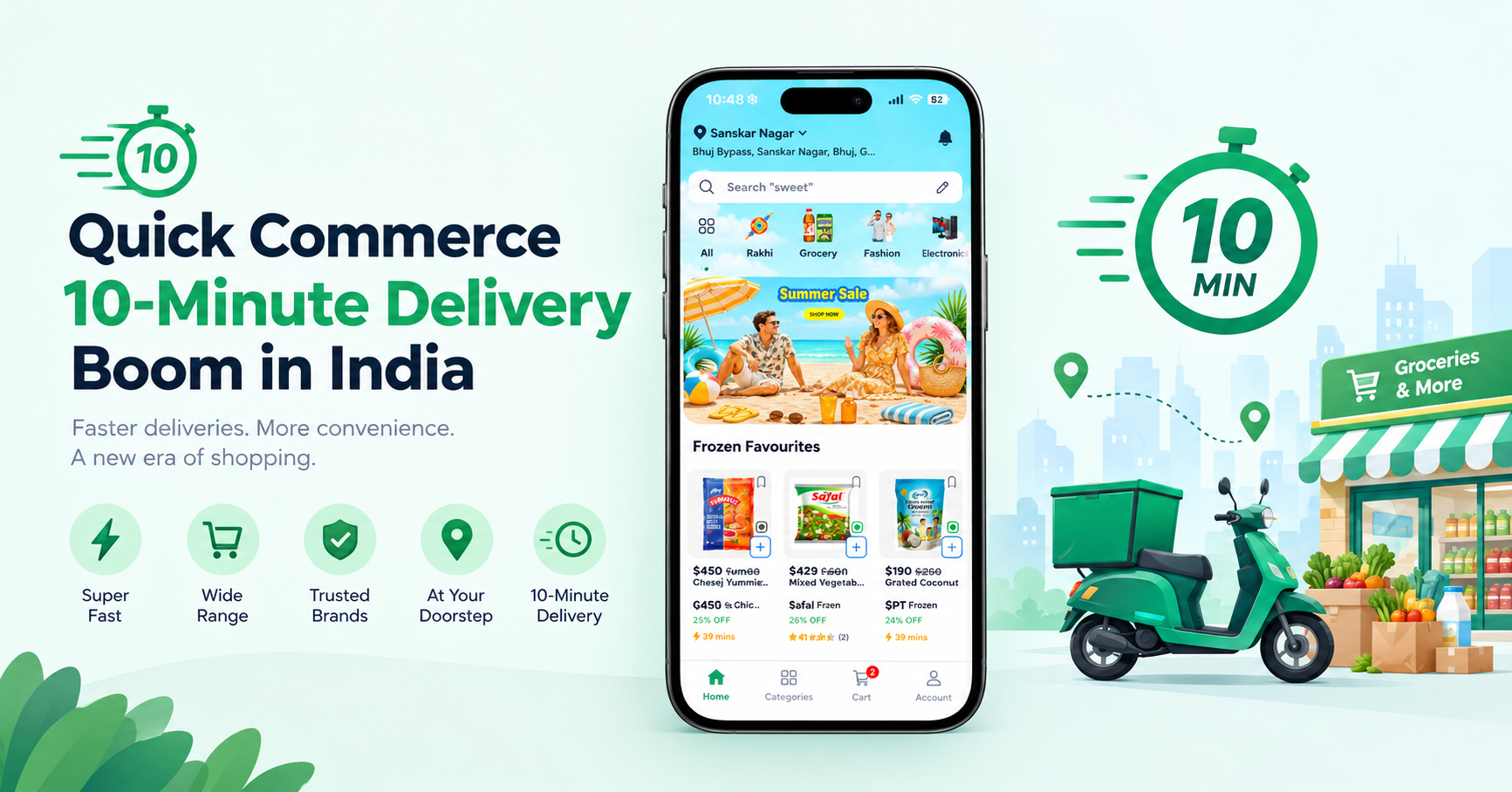
The 10-minute delivery boom, by the numbers
Blinkit, Zepto, and Swiggy Instamart made "I'll just order it" mean "it's here in minutes." Now the numbers are catching up with the hype:
- 40% growth in a year. An Equirus report expects quick commerce to reach ₹1.08 lakh crore in 2026, growing more than twice as fast as India's overall digital commerce.
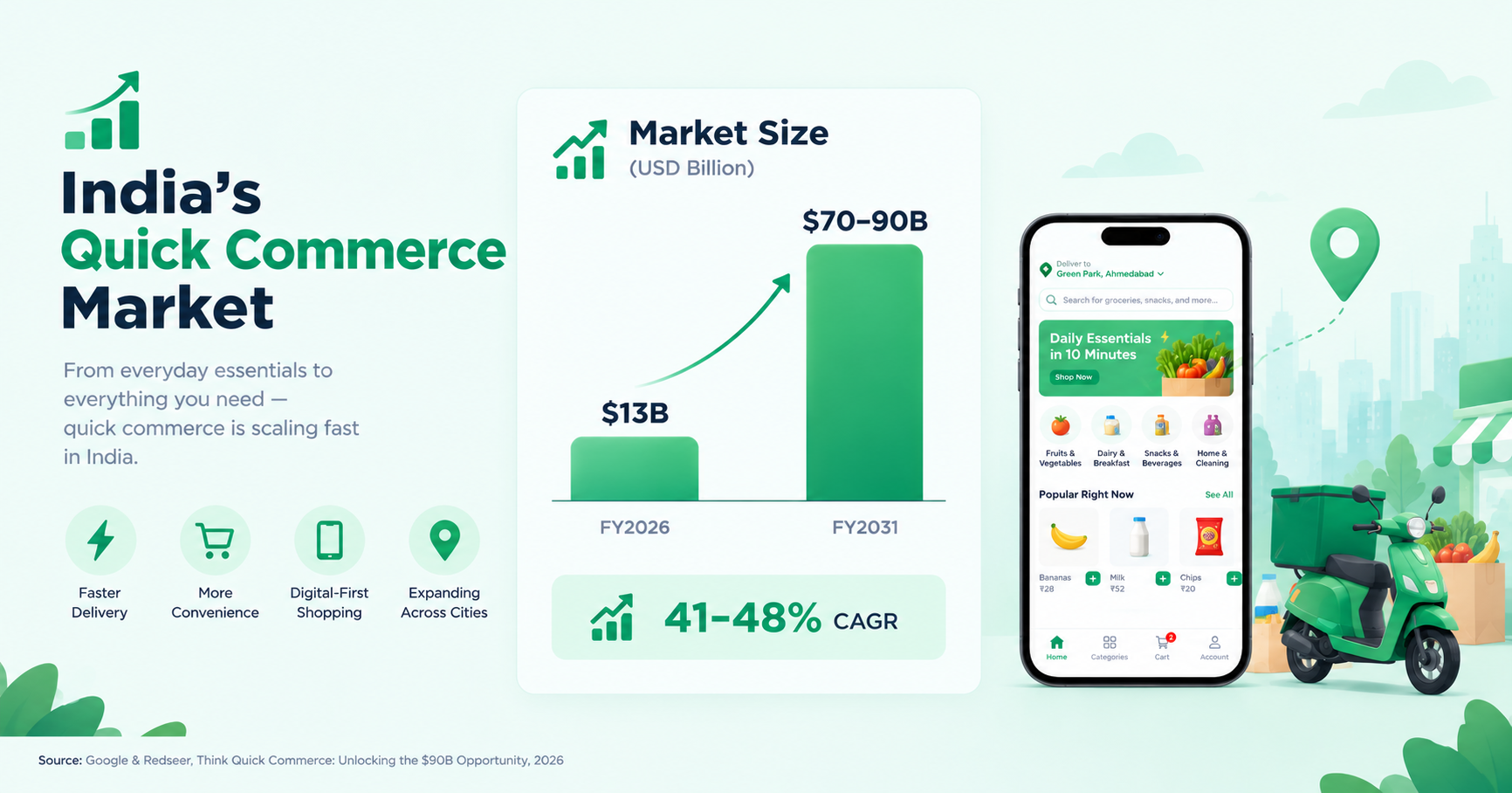
- $90 billion by 2031. A Google and Redseer study sees the market growing from about $13 billion in FY26 to $90 billion by 2031.
- Already a big slice of online shopping. Redseer says quick commerce is about 17% of online retail and roughly 70% of online grocery.
- More dark stores, fast. The combined dark store network of the top three players jumped from 3,405 to 5,026 locations in a year, per the same Equirus report.
Trend 1: Tier 2 cities are the new hotspots
The big metros are crowded, so the action is moving outward. Savills India reports that about a third of quick commerce dark stores are now in Tier 2 cities and smaller towns. Shadowfax names Lucknow, Indore, Coimbatore, and Surat among the cities seeing fast expansion.
The Infisum report also found that 66% of new direct-to-consumer orders now come from Tier 2 and Tier 3 cities (Outlook Business). For a new business, that's good news: smaller cities have less competition and customers who want faster delivery too.
Trend 2: It's no longer just groceries
Groceries opened the door, but customers now order medicines, beauty products, electronics, and gifts the same way. The same Infisum report says Gen Z already makes up nearly a third of online shoppers, and they're comfortable ordering anything on their phone.
This is where a local player can win. Big apps cover everything in a general way. A focused business (say, a pharmacy delivery service or a fresh produce app for your town) can serve its own neighbourhood better.
Trend 3: Local beats big in the last mile
Quick commerce depends on being close to the customer. Industry watchers say that dark store proximity, not app speed, is the real advantage. That's why a smaller, local business with nearby store partners can compete, even against well-known names.
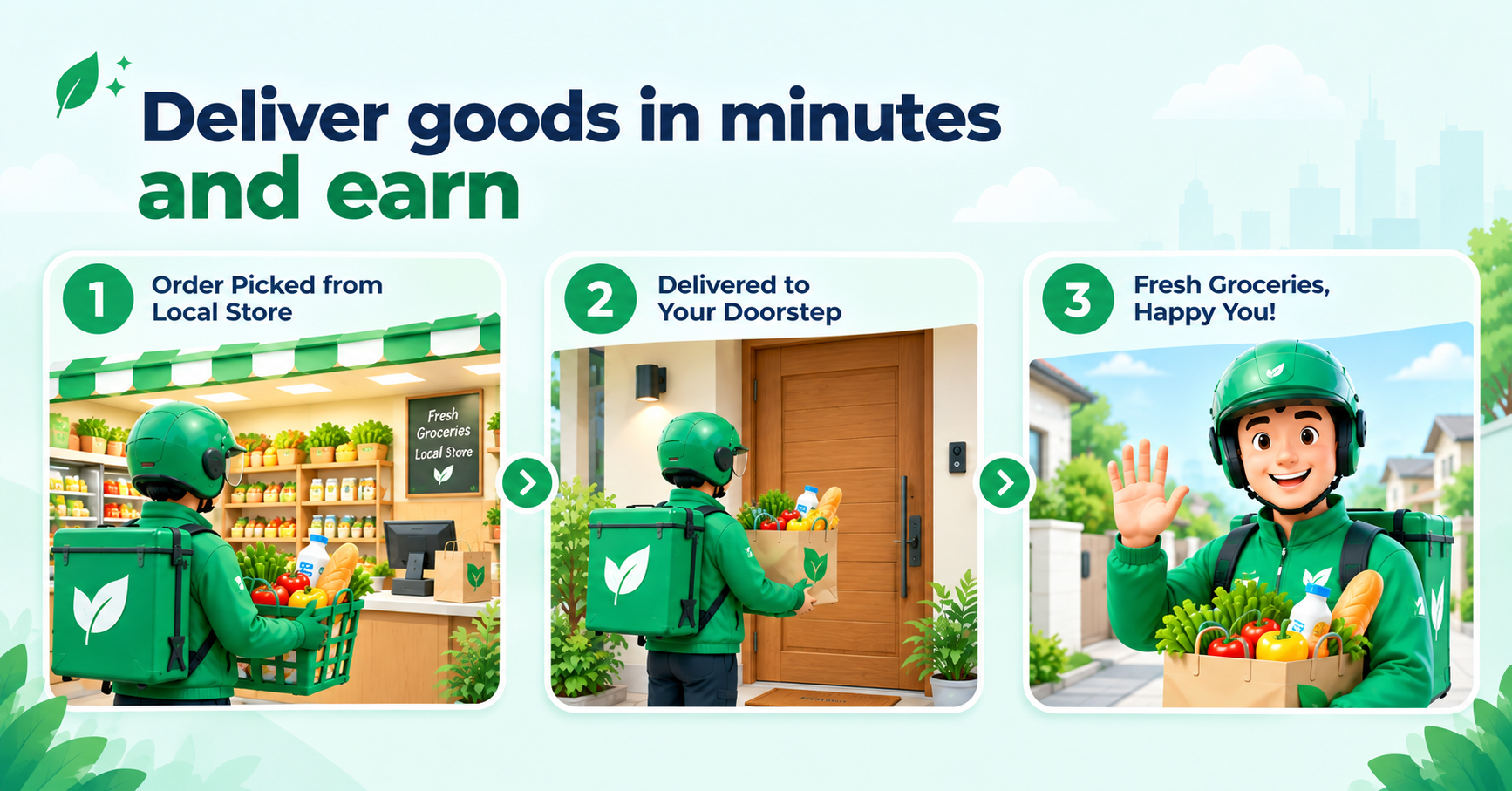
Reality check: it's not all easy money
Quick commerce is exciting, but honest numbers matter. Running dark stores is expensive, and even big players are working on profitability. The smart way to start is small: one city, a few partner stores, and a simple delivery team, rather than a big upfront investment in warehouses.
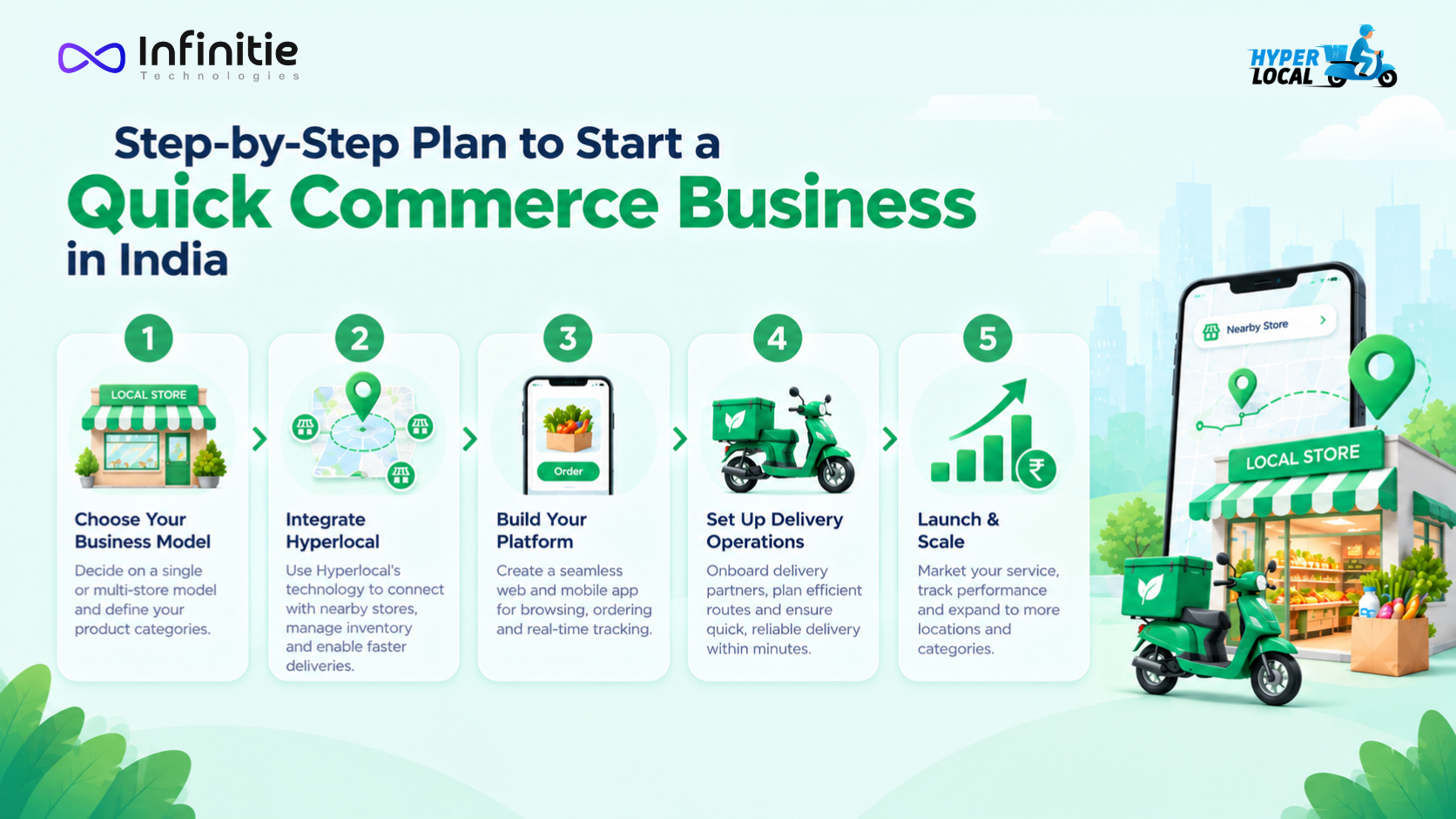
How to start a quick commerce business in India: 6 simple steps
- Pick your niche. Groceries, food, medicines, or a mix. Start with what you know.
- Choose one area. A single city or neighbourhood is enough. Tier 2 cities are a smart pick.
- Partner with local stores. Existing shops can fulfil orders, so you don't need your own dark store on day one. For food and medicines, check the licences you need in your state.
- Get your app. You need a customer app, a delivery partner app, and an admin panel. A ready-made product like Hyperlocal gives you these in one package, so you can launch faster than building from scratch.
- Build your rider team. Start with a small group of delivery partners and grow as orders increase.
- Launch and learn. Begin with one zone, watch what customers order, and fix delivery times before expanding.
Have an idea but not sure where to begin? Share it with us on WhatsApp and we'll help you plan the first steps.
What's next for quick commerce?
Experts expect 10-minute delivery to become normal in India's top 30 cities by 2027 (Shadowfax), with more categories and smaller cities joining in. The people who start now, with a clear niche and a local focus, will be in the best position as that happens.
Frequently asked questions
What is quick commerce?
Quick commerce, or q-commerce, is a way of shopping where products like groceries, food, and medicines are delivered in about 10 to 30 minutes, usually from stores or dark stores close to the customer.
How can I start a quick commerce business in India?
Choose a niche and a city, partner with local stores, get a delivery app (customer, rider, and admin), build a small team of delivery partners, and launch in one area before expanding.
What is a dark store?
A dark store is a small warehouse that looks like a shop but is closed to walk-in customers. It only packs and ships online orders, which keeps delivery quick.
Do I need a dark store to start?
No. You can begin by working with existing local stores and use an app to receive orders and assign riders. You can add dark stores later, once demand grows.
Is quick commerce profitable?
It can be, but many large players are still working on profitability because dark stores and fast delivery cost a lot. Starting small and local helps keep costs under control.
Which cities are best for a new quick commerce business?
Tier 2 cities such as Lucknow, Indore, Coimbatore, and Surat are seeing fast growth, and they often have less competition than the big metros.
Ready to ride the trend?
Quick commerce is still early in smaller cities, and the technology is easier to get than ever. Take a look at Hyperlocal to see what a ready-made quick commerce app includes. Still have questions or feeling stuck? Message our team on WhatsApp and we'll guide you.