.svg)
White-Label vs Custom App: What Delivery Startups Should Choose
 By Infinitie Technologies9 min read

Most delivery startups should start with a white-label (ready-made) app, since it costs far less and launches in weeks instead of months. Custom apps only make sense with a big budget or a very unique model. Ready-made source code like Hyperlocal gives you speed and ownership together.
White-Label vs Custom App: What Delivery Startups Should Choose
By Infinitie Technologies (building apps and source code products since 2018, 3,500+ customers worldwide) · Updated
Quick answer: For most delivery startups, a white-label (ready-made) app is the better starting point. It costs far less and launches in weeks instead of months. Choose a custom app only if you have a large budget and a business model that no ready-made product supports. Ready-made source code gives you speed and ownership together.
What is a white-label delivery app?
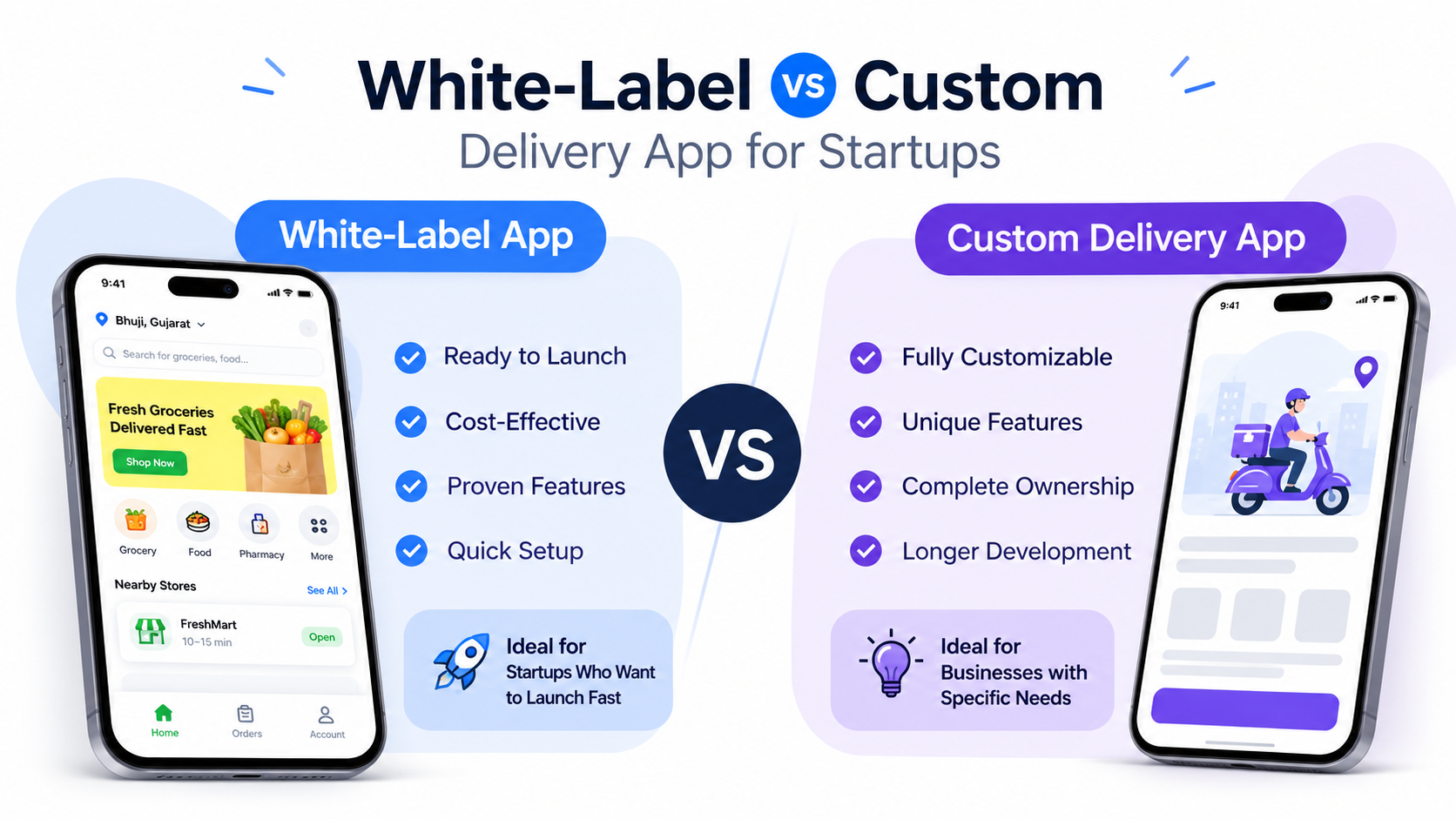
A white-label delivery app is a ready-made app that you rebrand with your own name, logo, and colours. The core features (ordering, payments, rider tracking, admin controls) are already built, so you skip months of development and launch as your own brand.
What is a custom delivery app?
A custom delivery app is built from scratch for your business by a development team. You decide every feature and screen, and you pay for the design, development, testing, and maintenance.
How do the costs compare?
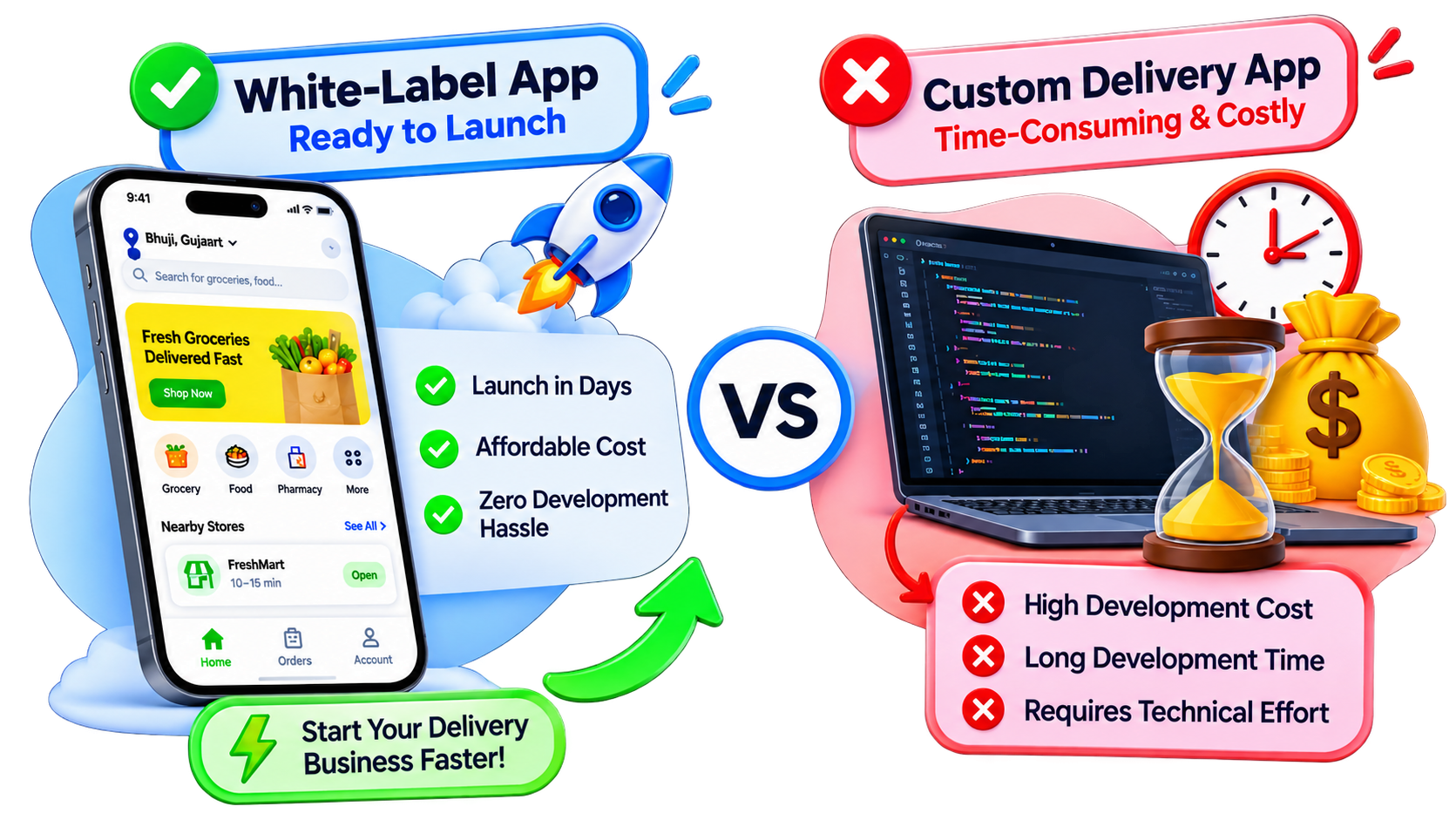
White-label is much cheaper upfront. LowCode Agency (2026) puts white-label apps at $5,000 to $30,000 upfront, plus monthly fees of $200 to $2,000, while custom mobile apps run from $50,000 to $300,000 plus separate maintenance. For delivery software specifically, Decode estimates $100,000 or more and 6+ months for custom, against $30,000 to $50,000 for white-label that is ready to deploy.
These are agency estimates and vary a lot by scope, so treat them as a guide.
| Factor | Custom app | White-label app |
|---|---|---|
| Upfront cost | High ($50,000–$300,000 range) | Low ($5,000–$50,000 range) |
| Time to launch | 6+ months | Days to a few weeks |
| Customization | Complete freedom | Depends on the product |
| Risk | High (you pay before you know it works) | Low (product is already tested) |
| Ongoing costs | Maintenance and updates | Fees or hosting, depending on the model |
| Best for | Funded teams with unique needs | Startups and local businesses |
Is there a third option?
Yes, and it's worth knowing about. Not all white-label products work the same way:
- White-label subscription (SaaS): you pay monthly, the provider hosts the app, and you rent access. It's quick to start, but the fees continue and the code isn't yours.
- Ready-made source code: you buy the full code once, host it on your own server, and customize it. You get white-label speed with ownership. Hyperlocal works this way.
- Custom build: full control, but the highest cost and the longest wait.
Ownership matters over time. As iCoderz notes, recurring fees can lower the long-term return of white-label subscriptions, while owning the code tends to pay back more over the years.
When should a delivery startup choose white-label?
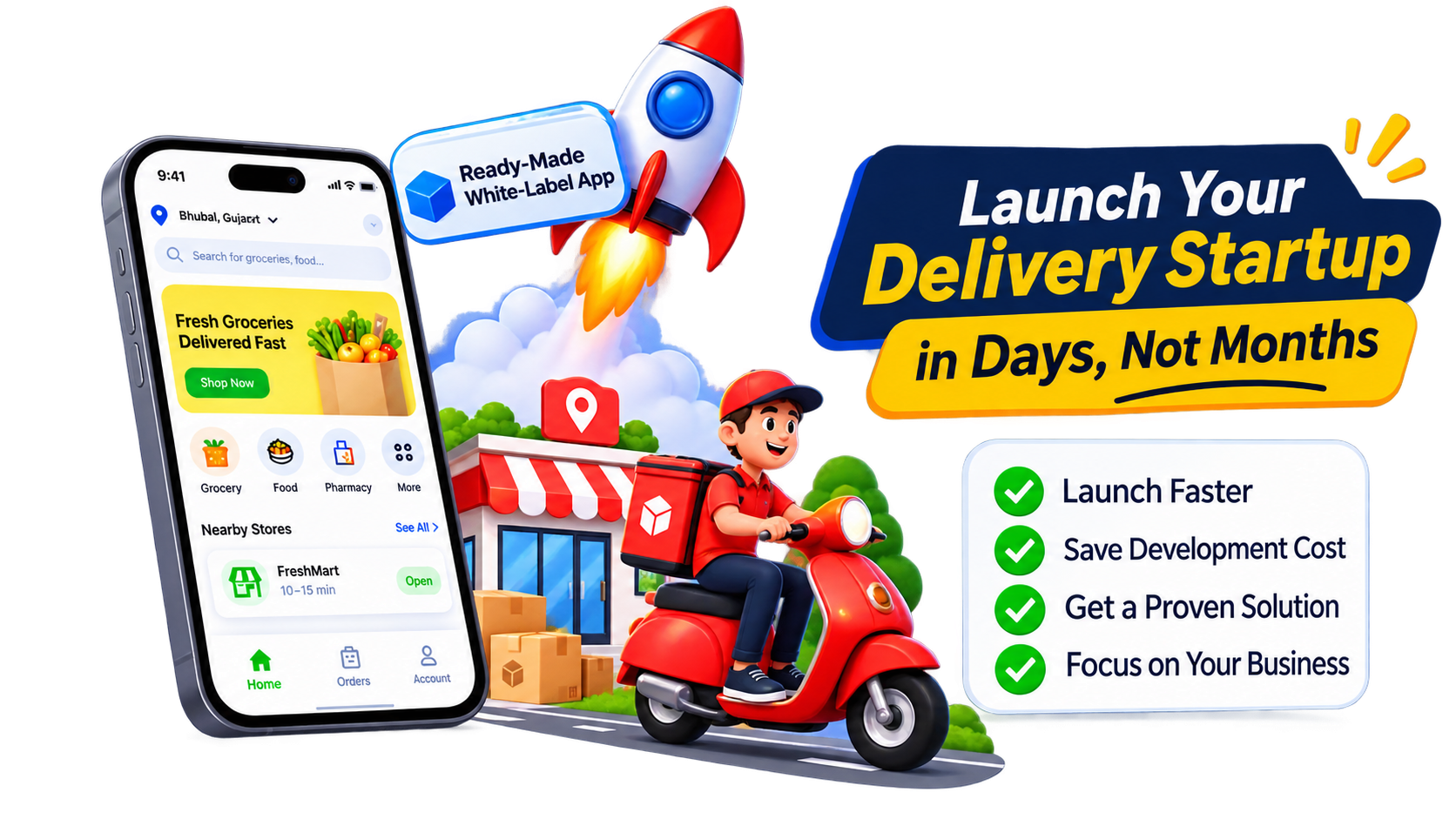
- You want to test your idea in one city before investing heavily.
- Your budget is limited and every rupee should go to riders, stock, and marketing.
- You need to launch in weeks, not months.
- Your business fits standard delivery features: customer app, rider app, vendor panel, and admin panel.
When should a delivery startup choose a custom app?
- You have a large budget and a technical team to maintain the product.
- Your model needs something unusual, such as a special pricing or routing system.
- You plan to grow into a large multi-city operation from day one.
If none of these fit, start with a ready-made base. Because you own the source code with products like Hyperlocal or HyperCommerce, you can keep adding custom features as your business grows.
How do you choose in 4 steps?
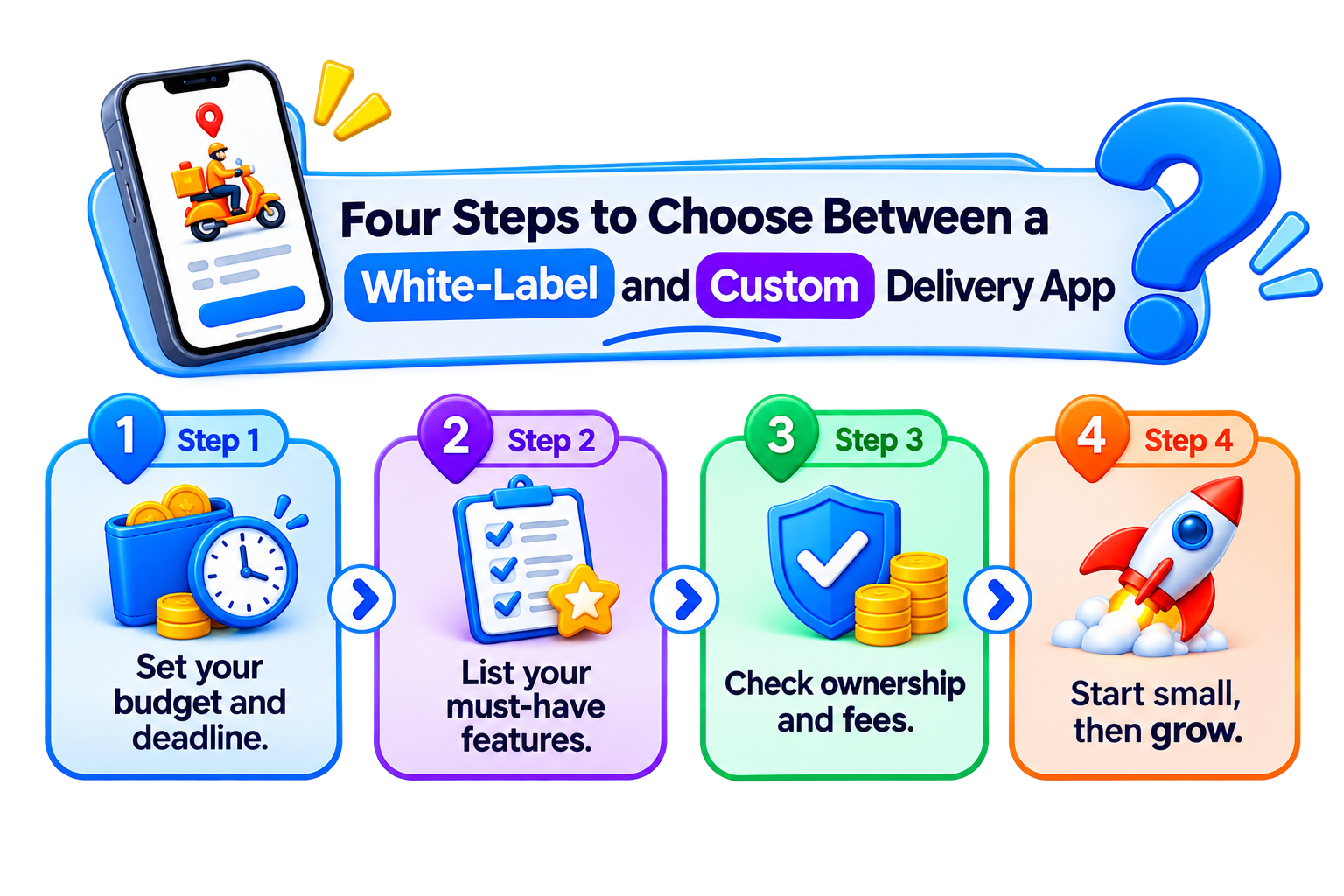
- Set your budget and deadline. Decide how much you can spend and how soon you want to launch.
- List your must-have features. Separate what you need on day one from what can wait.
- Check ownership and fees. Ask whether you get the source code, where it's hosted, and what you pay every month.
- Start small, then grow. Launch in one area with a ready-made app, learn from real orders, then customize.
Still confused between the two? That's completely normal. Tell us about your delivery idea on WhatsApp and we'll point you in the right direction.
Frequently asked questions
What is the difference between a white-label app and a custom app?
A white-label app is a ready-made product you rebrand as your own. A custom app is built from scratch for your exact needs. White-label is cheaper and faster, while custom gives you total freedom but costs more and takes longer.
Is a white-label delivery app cheaper than a custom app?
Yes. Agency estimates put white-label delivery apps at roughly $5,000 to $50,000, while custom builds often start at $50,000 and can pass $100,000. Prices vary by features and provider.
How long does it take to launch a white-label delivery app?
A ready-made app can usually be set up and launched within days to a few weeks. A custom delivery app typically takes six months or more.
Can I customize a white-label delivery app?
It depends on the product. With a subscription, changes are often limited. With ready-made source code like Hyperlocal, you get the full code, so you can change the design and features yourself or with a developer.
Do I own a white-label app?
Not always. With a white-label subscription, the provider usually owns and hosts the code. With ready-made source code, you buy the code, host it on your own server, and own it.
Which is better for a delivery startup: white-label or custom?
For most startups, white-label is the better start, since it lowers cost and risk and lets you test demand quickly. Custom makes sense later, or if you have a large budget and unique requirements.
Ready to launch your delivery business?
If you want to start fast without giving up ownership, take a look at Hyperlocal for grocery, food, and pharmacy delivery, or HyperCommerce for a multi-vendor marketplace. Questions or feeling stuck? Message our team on WhatsApp and we'll help you decide.