.svg)
Why Businesses Are Building Their Own TikTok Instead of Just Posting on One
 By Infinitie Technologies2 min read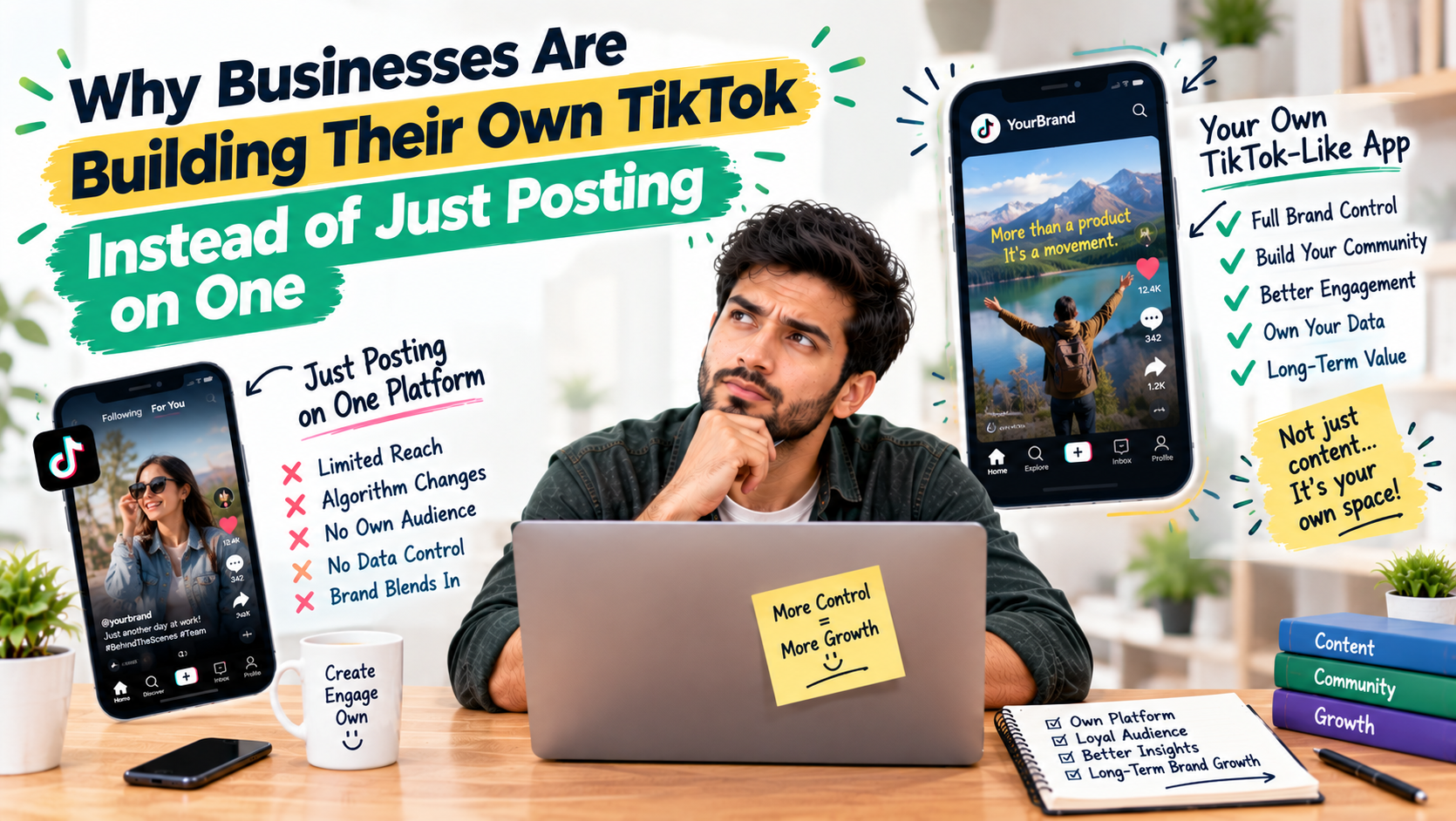
Posting on TikTok grows someone else's platform, not your own. Here's why more businesses are launching their own short-video app instead of renting reach — and what they get back by owning the platform outright.
Why Businesses Are Building Their Own TikTok Instead of Just Posting on One
Posting on TikTok grows an audience — just not one the business actually owns. Every view, follower, and algorithm boost lives inside someone else's platform, and a single policy change or ban can wipe out years of content and reach overnight. That risk is exactly why more businesses are choosing to build their own version instead.
The problem with renting reach
A brand's TikTok following isn't really the brand's — it's TikTok's user, temporarily paying attention to that content. The algorithm decides who sees what, ad revenue is split with the platform, and none of that audience data ever really belongs to the business that built it.
What owning the platform changes
A business running its own short-video app controls the feed, keeps all the ad and subscription revenue, and owns the user data outright. It's slower to build an audience without an existing platform's traffic — but every user gained actually stays, with no algorithm change able to take it away.
This is what PlayMax is built for — a Flutter app for videos, reels, and shorts with a Laravel admin panel, giving a business the same short-video experience users already expect, just running on infrastructure the business actually owns.
The takeaway
Posting on TikTok is marketing. Owning a video platform is a business asset. The two aren't the same thing, and more brands are realizing the second one is worth building.